
Loading
Five logo

Paula Riano

AI Strategy Advisor
Auckland
paula@fivenz.comBook a call
Team member photo

Paula Riano brings extensive experience in bridging the gap between cutting-edge technology and human behaviour to ensure organisations can actually absorb the tools they invest in.

She has led AI change programmes, agile transformations, and engineering project delivery for a number of leading organisations and says her ‘super-power’ is the ability to enable people to own their own AI journey.

She also brings a deep technical background in electronics engineering and project management with a passion for driving organisational agility and sustainable AI adoption.

She's got over 20 years of experience in leading, doing, coaching, and advising at some of the world's and NZ's leading organisations.

I've recently written about:

Performance

Clean Data vs. Big Data: Why Your AI Strategy Is Only as Good as Your Worst Spreadsheet

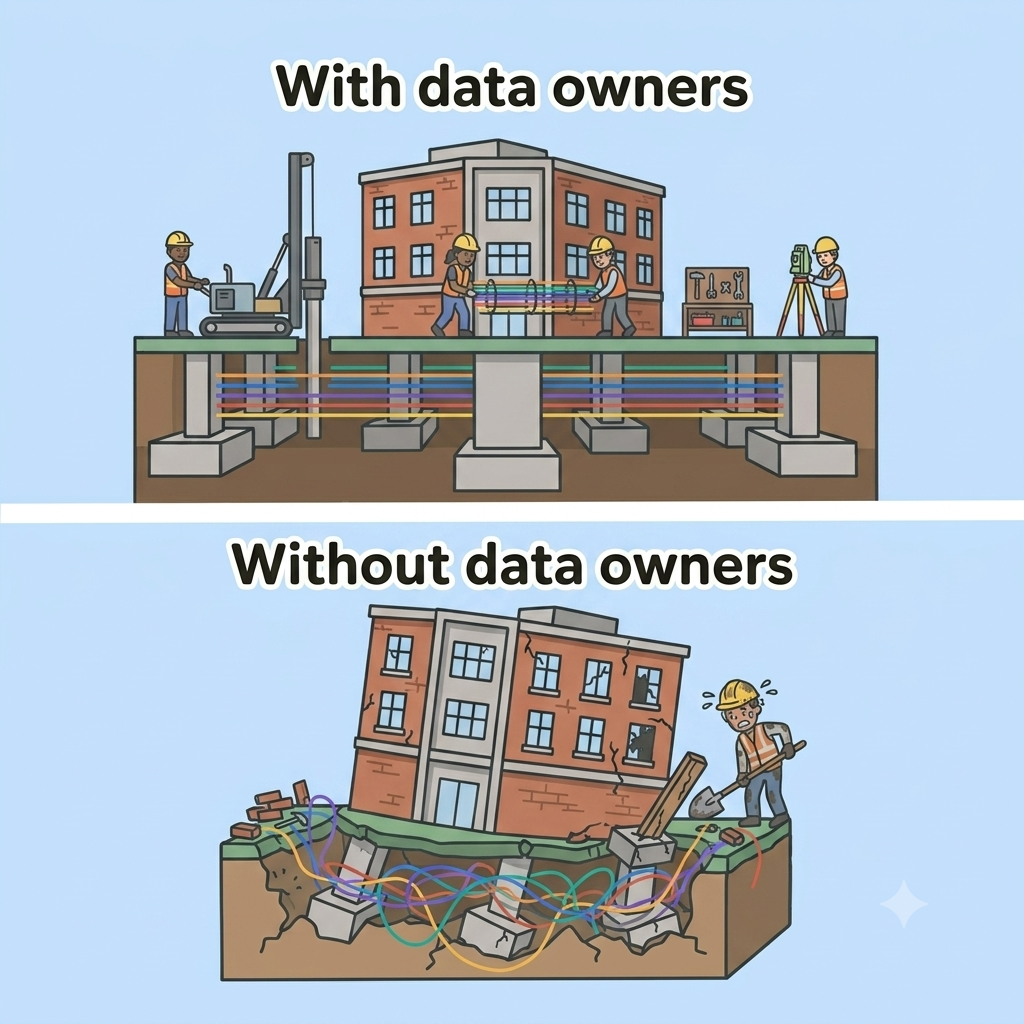
Your massive corporate data lake is probably a multi-million dollar liability. In my experience across Australian and New Zealand enterprises, structured databases are well managed, but unstructured data remains a chaotic frontier with zero clear ownership. This neglect forces teams to manually corroborate information every single time a process runs, destroying productivity and compromising corporate intellectual property. We cannot feed messy data into advanced models and expect reliable strategic outputs. To scale successfully, Subject Matter Experts must become data literate owners of their own information. Leaders must establish strict governance and automated workflows that centralise and verify this information upfront, before it ever enters corporate systems.
Strategy & Leadership

Most New Zealand boardrooms didn't choose their AI strategy. They inherited it.

Most New Zealand companies didn't choose their AI strategy. Microsoft and Google chose it for them. Copilot came with M365. Gemini came with Workspace. Convenience got mistaken for a decision. What I see across NZ enterprises is frontier-grade models doing clerical work, at frontier prices, while staff re-explain the same context every single day. The fix isn't a bigger model. It's a fit-for-purpose environment: small and open-weight models fine-tuned on your own well-governed data, with routing that saves the expensive models for the hard problems. But data comes first. Governance and consistency are the fuel. Feed a model fragmented information and it fails, no matter how you've sized it. There's a control angle too. Renting your entire AI capability from two offshore providers is a dependency, not a strategy. Where would you draw the line between convenience and control? #EnterpriseAI #AIStrategy #NZBusiness #DataGovernance #AILeadership
Strategy & Leadership

The Executive Mirror: Your Team Won't Adopt AI If You Haven't

Your AI strategy has an executive alignment problem, not a technology problem. When leadership isn't aligned on AI, the rest of the organisation doesn't know which way to face. Why AI fluency at the top — not technical expertise — determines whether adoption scales, and what the shift from AI spectator to practitioner actually requires of NZ leaders.
People

Upskilling vs. Replacing: Why it’s cheaper (and better) to train your experts in AI than to hire "AI experts"

Hiring an AI expert will not make your organisation AI-ready. Your people will. In 10 years, AI fluency will be assumed in every job, the same way knowing how to use a computer is today. But right now, most leaders are still delegating AI to whoever has "AI" in their title and hoping for the best. What I see across NZ enterprises: the specialists build something, the rest of the organisation doesn't trust it or use it, and the initiative fades quietly. The real risk isn't external. It's internal IP walking out the door. Most organisations have no clean data, no documented processes. The knowledge lives in your people. Upskill them, or lose both the expertise and the institutional memory. Leaders need to roll their sleeves up. You cannot delegate your own AI fluency. Your team is watching what you do, not what you say.
Performance

The End of "Busy Work": What your team can achieve when they aren't stuck in spreadsheets

Most leaders are focused on the AI sceptics. I'd argue that's the wrong place to look. In my experience, enterprise teams split into thirds. One third are already experimenting with AI on their own. One third are curious but waiting for direction. And one third aren't there yet. That middle third is ready. They just need a leader who's gone first. The real cost of busy work isn't the hours lost to spreadsheets. It's the cognitive load that follows. A team that spends its morning reformatting data doesn't bring its best thinking to the afternoon. That's the productivity loss no dashboard captures. AI won't fix this on its own. Process redesign will. And that starts with leaders asking a simple question: how would we do this if we built it AI-first today?
People

The 4-Day Work Week: AI's Role in our changing reality

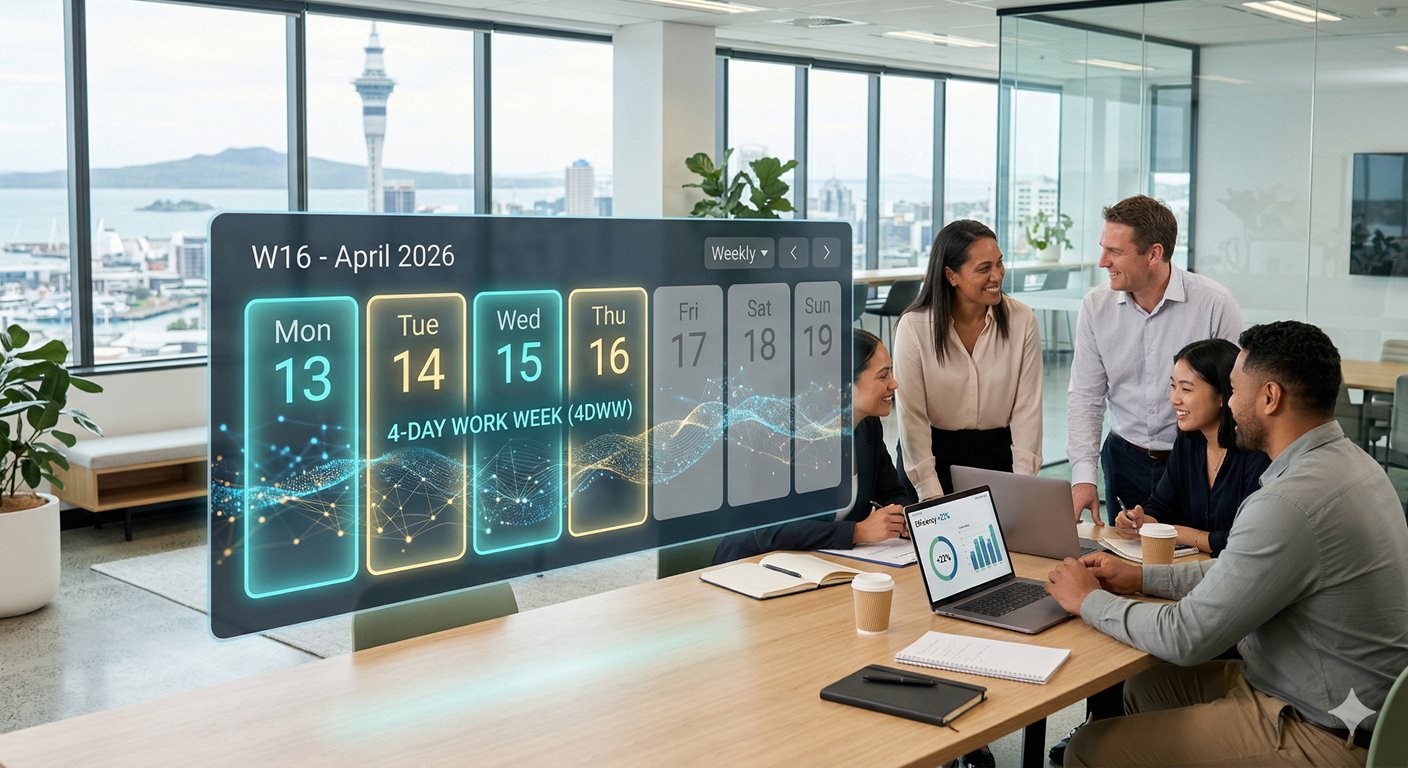
The 4-Day Work Week (4DWW) has shifted from a wellbeing perk to a critical business strategy for New Zealand enterprises. Recent data shows that companies integrating advanced AI into their 4DWW pilots achieve a 22% improvement in output efficiency and a 15% reduction in costs. To move beyond small pilots and successfully scale, leaders must use strategic AI roadmaps to automate mundane tasks and focus human talent on high-value work.

You can talk to me about: