The leadership readiness gap

Here's a question every board in Aotearoa should be asking right now.
Is your organisation changing faster than your leaders can keep up?
Because the data says yes. According to McLean & Company's 2026 HR Trends Report, organisational change is now outpacing leadership capacity across virtually every sector. Seventy percent of organisations are struggling to manage the pace of change. And 72% of leaders admit their organisations aren't fully prepared for what's coming next.
This is very clearly a capability problem. And it's one that I feel that most boards still aren't treating with the urgency or the respect it deserves.
The gap barely anybody's measuring
Most executive teams can tell you their revenue forecast, their headcount plan, and their technology roadmap. That's bread and butter. Instead, try asking them about leadership readiness - the actual capability of their people to execute on the strategy they've set. You'll often get silence, or a vague reference to a leadership programme that ran two years ago but nobody can remember what was in it.
That silence is expensive. Research consistently shows that managers account for at least 70% of the variance in team engagement, which remains one of the strongest predictors of both retention and performance. It has been for decades - this isn't a new problem. When your leaders aren't equipped, the effects cascade. Execution slows, your best people leave, and strategic initiatives stall. It's rarely because the strategy was wrong, but is usually because the people who were expected to deliver it weren't ready.
Worryingly, only 35% of HR teams report being high-performing at developing their leaders, meaning that the vast majority of organisations are asking their people to navigate an unprecedented rate of change with leadership skills built for a different era.
Even more worrying, is that many of the RFPs for leadership development programmes look the same (or very similar) as they did 20 years ago, and simply aren't looking to equip leaders with the right shifts in belief, mindsets and approaches in order to navigate the gap.
Why traditional development isn't working
The instinct, when boards recognise a leadership gap, is to commission a programme. Bring in a provider, run a cohort through some workshops, tick the box.
We see this pattern constantly, and it almost never produces lasting change. Here's why.
Most leadership development is designed in isolation from the organisation's actual strategic challenges. It teaches frameworks in a classroom and hopes they'll transfer to the messy reality of leading a team through transformation, cost pressure, or market uncertainty. It treats leadership as an individual skill rather than an organisational capability.
The result is leaders who can articulate the theory but can't translate it into how they run a Monday morning stand-up, navigate a difficult restructure conversation, or hold their team accountable when everything around them is shifting.
What's needed isn't more programmes. It's a fundamentally different approach to how organisations build capability in their people - one that's embedded in the real work, connected to the strategy, and designed to create lasting behaviour change, not just momentary inspiration. Inspiration still has a place - as does formal learning - but it can't be seen as a silver bullet to overcome this ever-widening gap.
What boards should be asking
If you're sitting around a board table in 2026, here are four questions worth raising.
First: do we know, with any specificity, where our leadership capability gaps actually are? Not based on assumptions or tenure, but on a genuine assessment of what our strategy demands and what our leaders can currently deliver.
Second: are we developing leaders for the organisation we are today, or the one we need to become? The skills that got your senior team to where they are may not be the skills that will get the organisation to where it's going. Adaptability, comfort with ambiguity, the ability to lead through continuous change.... these aren't innate traits! They're capabilities that can be built, but only if you're intentional about it.
Third: are we investing in the middle? It's tempting to focus development on the C-suite and the high-potential pipeline. But the leaders who determine whether strategy actually lands are your people leaders - the managers and senior managers who translate direction into daily decisions. When they're under-equipped, the whole system suffers.
Fourth: is our investment in people proportionate to our investment in everything else? Organisations will happily spend millions on a new platform, a restructure, or a strategic pivot. But the people expected to make those things work? They often get a fraction of the investment, and then we wonder why execution falls short.
The organisations that will win this
The research is unambiguous on one point: when leaders are highly effective at people leadership, organisations are 2.3 times more likely to be high performers in innovation and agility. The return on getting this right is measurable, and it compounds.
At Five, we work with executive teams and boards to close this gap - not through off-the-shelf programmes, but by building people capability that's wired into the organisation's strategy, culture, and ways of working. Because for us, leadership readiness isn't a nice-to-have on the side of transformation - it's the thing that makes transformation possible.
The world is changing faster than most leadership models were designed for. The question for boards isn't whether to invest in your people. It's whether you can afford not to.

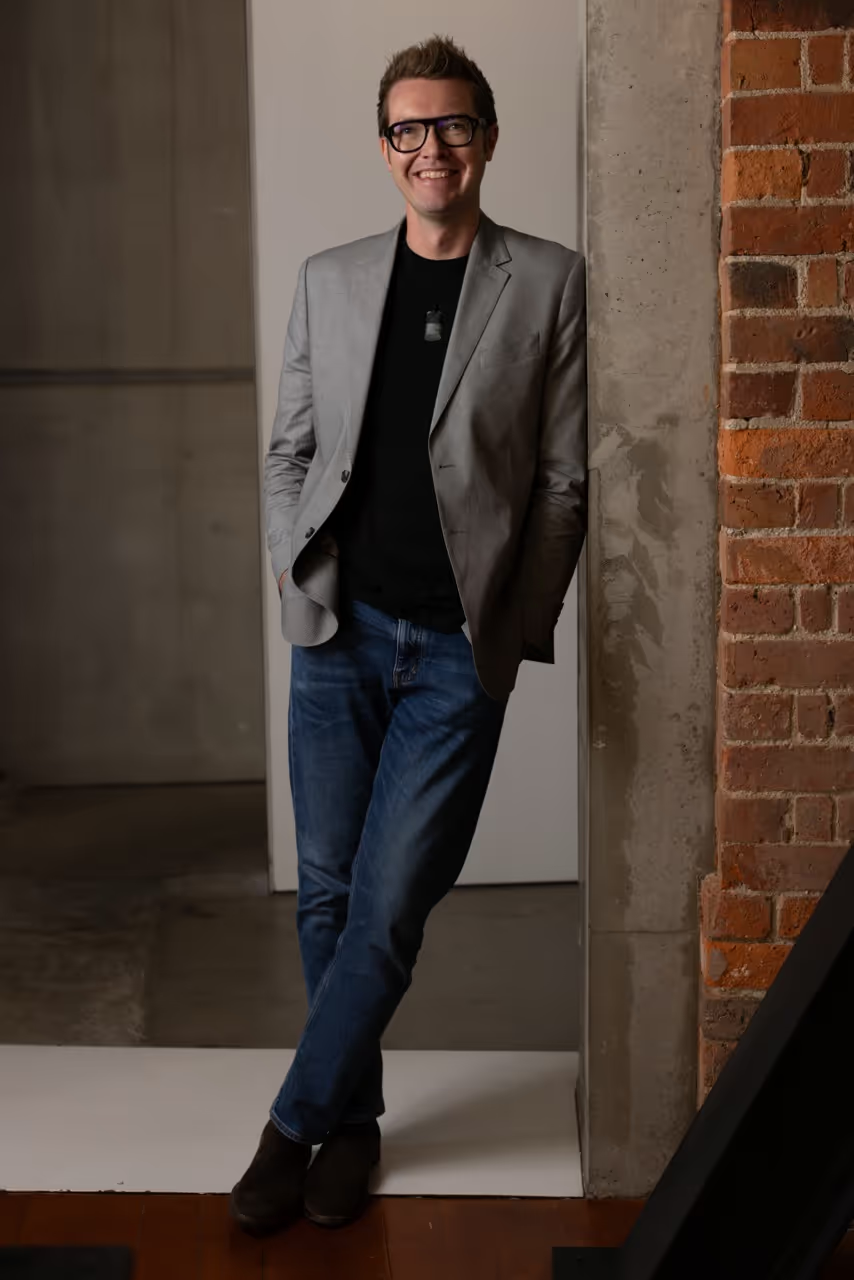
Who to talk to at Five

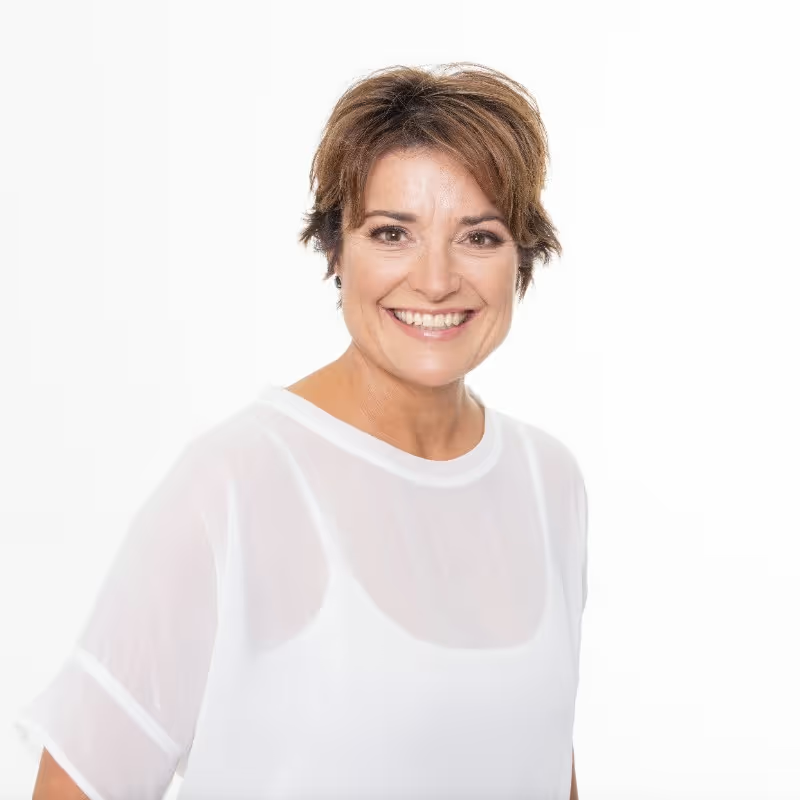
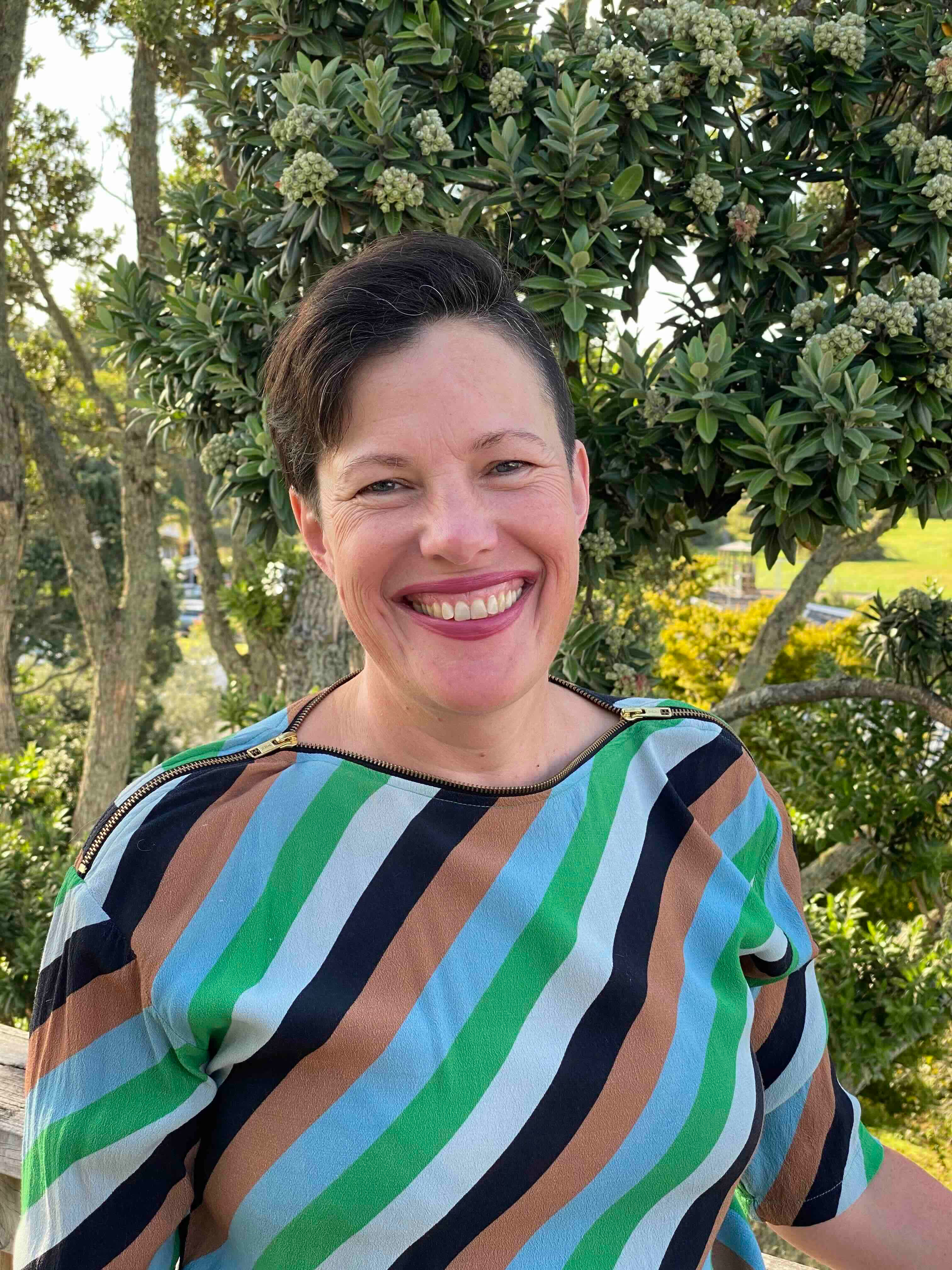
Related services

Make delivery inevitable.
© 2026 Five New Zealand Limited · NZBN 9429030159006 · Tāmaki Makaurau Auckland
Privacy notice