The gap between what we say and what we do

I was sitting in a boardroom a few months ago, watching a leadership team talk with real pride about their culture. "We've got an open door policy, a pretty flat structure, people can speak up whenever they need to, and psychological safety is something we take seriously." They used all the right words, and they meant every one of them.
Then I spent two days walking the floors, and what I saw was different. Not dramatically different, and certainly not toxic, but quietly and persistently misaligned in ways that nobody seemed to notice. People were routing decisions through informal channels because the formal ones took too long. A team lead who everyone knew was struggling hadn't been spoken to because "it's not really my place." Meeting rooms were booked back to back with status updates that could have been an email, while the actual problems got solved in corridor conversations that half the team never heard.
Nobody was lying in that boardroom, and they genuinely believed what they were saying, but there was a gap between what the organisation intended and what it actually did... and that gap was invisible to the people inside it.
Why the gap exists
The gap rarely comes from bad leadership, and almost always comes from proximity. When you're inside a system every day, you stop seeing it because you adapt to the workarounds and the unwritten rules and the way things "just happen around here." It becomes wallpaper. And because you're a good person doing your best, you naturally describe the culture you're trying to build rather than the one you've actually got.
I think of it like this. If you asked someone to draw you a map of their morning commute from memory, they'd give you a clean line from A to B. But if you actually followed them, you'd see the detour they take to avoid the Greenlane roundabout, the coffee stop to get their daily Coffee Supreme, and the five minutes they sit in the car park before going in because they need a moment. The real route is messier and more human than the described one, and it tells you heaps more about what's actually going on.
That's the action/intention gap. The distance between what we design for and what people actually experience. Between the process published on the intranet and the process that people actually follow. Between the values on the wall and the behaviours that actually get rewarded.
Observation before opinion
This is why Five starts almost every engagement with observation, before surveys or workshops or any of the structured stuff that usually gets wheeled out first.
When we work with retailers, we physically walk their stores and watch how they handle themselves and customers before we even think about programme design. We have a preference to experience the product sets and services of our clients so that we can be more valuable in sharing our observations and experiences as a real customer. We sit in meetings and watch how decisions actually get made, how information flows (and where it doesn't), and how people interact when there's no agenda in front of them. We map the real system, not the org chart version of it.
It sounds simple, and it genuinely is, but it's also the bit that gets skipped most often because it feels slow and passive and because someone in the room will always say "we already know what the problems are, let's just fix them."
And they're usually right about the symptoms... the meetings are too long, the approvals take forever, and people don't feel heard. But symptoms aren't causes, and if you redesign a process based on symptoms you'll build something that looks better on paper but breaks in exactly the same places, because you never understood why those places were broken in the first place.
Mapping the invisible
When we observe, we're looking for patterns in what people actually do rather than what they say they do... where energy flows, where it gets stuck, and where the informal system has quietly built a workaround that the formal system doesn't even know exists.
We had a client once where we mapped the actual decision-making path for a fairly routine approval. The official process had four steps, but the real one had eleven, including two people who weren't on the org chart anywhere near that function but had become dependencies because they were the only ones who understood how the system actually worked. In one case, we saw people emailing a spreadsheet to an inbox, but no-one knew who it went to, what they did with it, or why they were sending it. We eventually found that the mailbox was unattended, and had been for 3 years. 3 years of people sending stuff into the abyss! Nobody had designed that and it had just grown over time, and it was brilliant in some ways because those two people were keeping the whole thing moving... but it was also deeply fragile, because if either of them left, the entire process would collapse and nobody else would know how to pick it up. It worked in spite of the process, not because of it.
You can't see that kind of thing from a workshop, and you can only see it from watching.
From observation to design
Here's where it gets practical. Once you've mapped the real system, you can start designing with it rather than against it, and that's the difference between service design that sticks and service design that gets politely ignored.
If you know that people bypass the formal approval process because it takes three weeks and they need an answer in two days, you don't just build a faster approval process. You ask why the two-day need exists, and what would happen if the approval took three weeks, and whether the approval is even necessary in the first place. Sometimes the answer is yes, streamline it. But sometimes the answer is that the approval exists because someone created it eight years ago for a problem that no longer applies, and nobody's had the conversation to remove it.
That's what observation gives you... not just the what, but the why behind the what. And when you design from the why, things tend to land differently.
The culture you've got
Most organisations I work with have good intentions and they genuinely want a great culture and they invest in it and talk about it openly. But the culture you've actually got isn't the one you describe in your engagement survey or your values statement... it's the one people experience on a Tuesday afternoon when nobody's watching.
Closing the action/intention gap starts with accepting that the gap exists, not as a failure but as a natural consequence of being human inside a complex system. Then it's honest, patient, specific observation of what's really happening, followed by mapping what you find so the whole leadership team can see the same picture together. And then, only then, it's design.
Skip the first three and you'll redesign beautifully... for an organisation that doesn't exist.

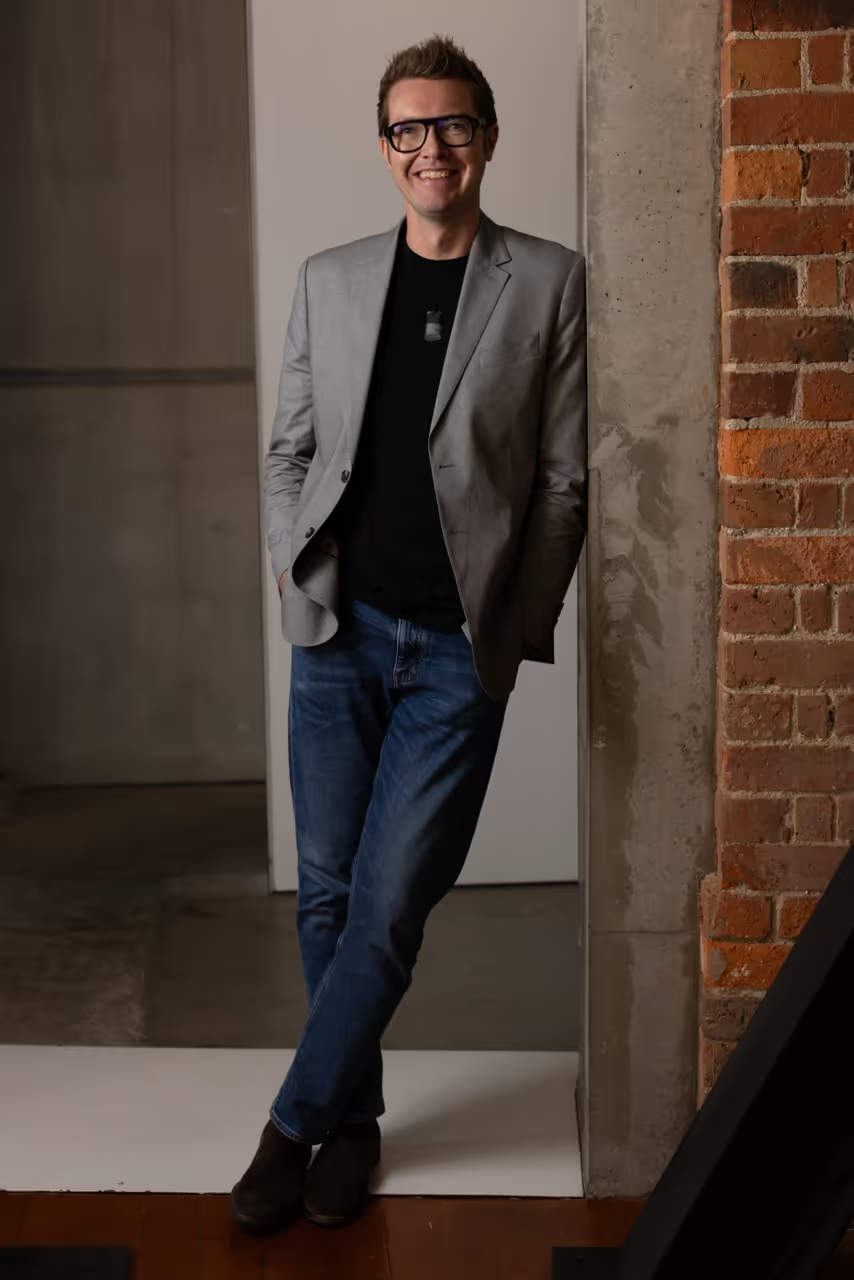
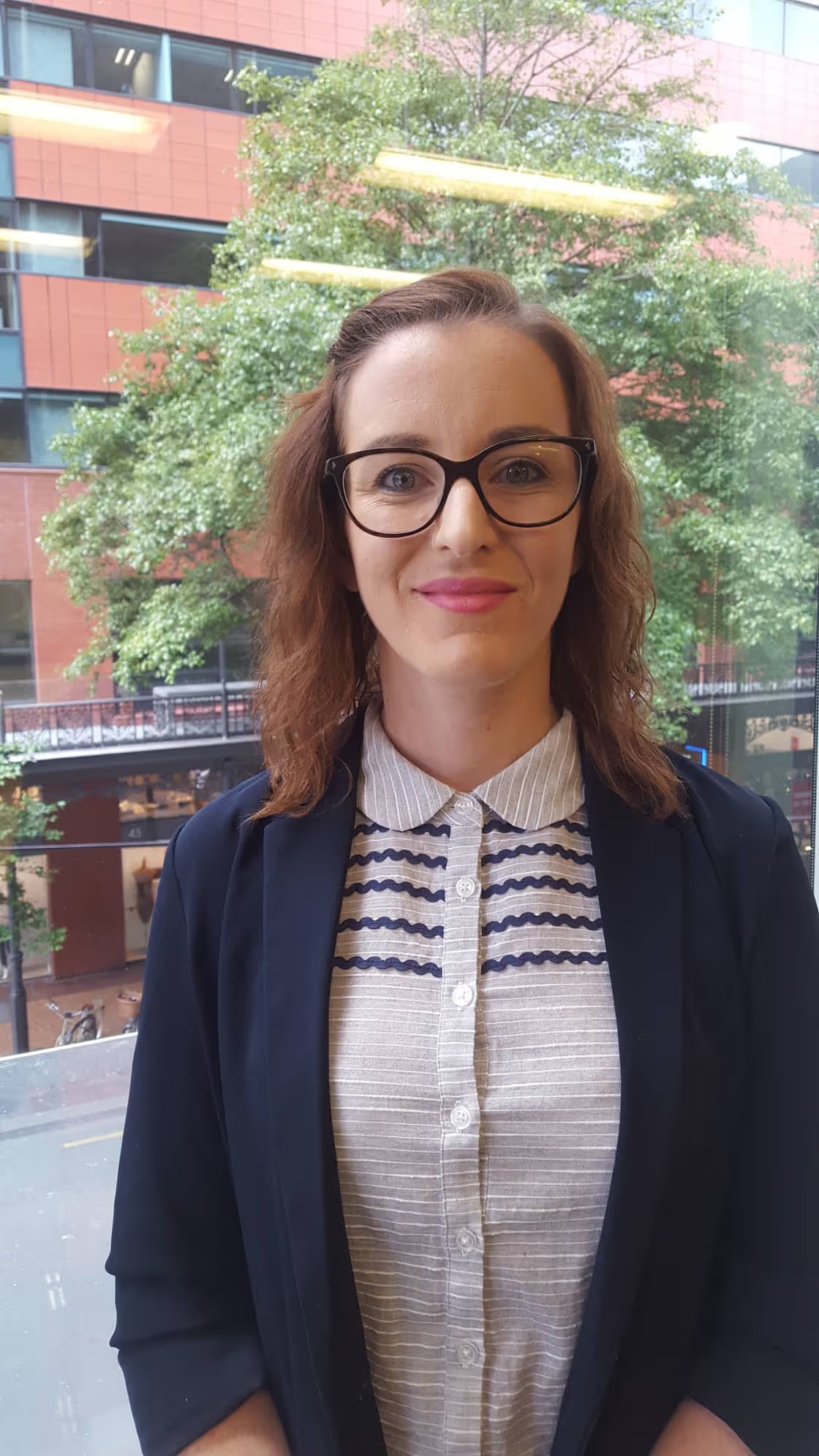
Who to talk to at Five

Related services

Make delivery inevitable.
© 2026 Five New Zealand Limited · NZBN 9429030159006 · Tāmaki Makaurau Auckland
Privacy notice