Menu
A Five engagement
Understand what your people need before anyone shows you a screen.
The easy way to choose an HRIS, an LMS or a wider people technology stack is a shopping trip: line up three vendors, sit through the demos, pick the sharpest screens. Plenty of organisations buy that way and plenty regret it. We do the harder and far more useful thing first – work out what your people actually need, and what your technology will actually allow.
We hold no partnership or referral arrangement with any vendor. Nobody in the room is paid by the answer.
Every requirement scoped twice, once against the lifecycle and once against what is technically feasible.
Why it matters
When the demo comes first, requirements get written backwards from whatever was on the screen. The gaps show up eighteen months later as workarounds, spreadsheets, and a second integration project nobody budgeted for.
There is also a quieter problem. Users, subject-matter experts and leaders each want different things from the same system, and usually haven’t realised how far apart they are. Working through that difference is slow and a bit uncomfortable, and it’s the only way to choose well.
Every system decision gets a test to meet, rather than a demo to be impressed by.
How it runs
Scoped to what you need. Some organisations want a lightweight market scan and RFP support; others want the full discovery with payroll looked at properly. We will tell you honestly which one your situation calls for, including the risks of the lighter option.
What kind of solution actually supports your strategy and your operations, what your people need from it, and what your existing technology won’t allow.
Vendor options assessed against your requirements rather than against their demo. We sit on the panel, score with you, and stay through procurement.
The conditions for the thing to actually land: documentation, infrastructure, process definition, and the mindsets to go with them.
Scoping, part one
Requirements come from the journey a person actually travels through your organisation, from before they’re hired to after they have left. Six areas, run as workshops and interviews, categorised by function, priority and user need.
Rostering, time and attendance, labour forecasting, movement.
Both ends of the journey, including the provisioning and compliance underneath them.
The most regulated and least forgiving part of the stack. Usually worth its own deep dive.
Goals, check-ins, calibration, career pathways and learning.
Leave, wellbeing, internal mobility and the moments people actually feel.
Disciplinary process, documentation, and the reporting that has to hold up.
Detailed user stories written for the tender, with clarity on how each feature has to fit the business process around it.
Works out whether a feature is genuinely needed and what the business impact is either way, so the maybes get decided rather than carried.
Scoping, part two
A requirement nobody can build isn’t a requirement. The second pass tests everything against your current landscape, your integrations, and the constraints you’re stuck with for now.
Without a shared identity across employees and contractors, compliance, reporting, provisioning and authentication all get expensive. It is a foundational barrier that quietly blocks the benefit of everything you buy on top of it, and it’s worth settling before you shop.
A structured read of your current systems, integrations and constraints, tested against security, scalability, interoperability and compliance. The output is a picture of the feasible architectures with the trade-offs and cost implications visible – a decision-making tool, not a diagram.
Selection
The refined requirements, user stories and evaluation criteria become an RFP report, which is what you take to market. Then we stay for the part where it usually goes wrong.
We hold no partnership or referral arrangement with any vendor we recommend, and we say so in writing. When a consultancy resells the licence it tells you to buy, the incentive only ever points one way, and it never points at a smaller deployment. Some of what we recommend is not a purchase at all.
In practice
A learning platform decision that turned into a people technology discovery: seven lifecycle stages, sixteen prioritised business-critical outcomes, around ninety user stories – and only then a system scored against them. We taught the team to run the research themselves, because a discovery only the consultant can repeat is worth about as long as the invoice.
Read the case studyChoosing well and landing well are different jobs. Readiness covers the documentation, the infrastructure, the process definitions and the mindsets that have to be in place before go-live, and it’s where a good selection usually comes undone. We design the process and the methodology first, then build the tools and workflows that support it, so the system decision follows the way you want to work rather than leading it. Everything we hand over is editable and yours – no licences, no dependency on us.
Who you’d work with
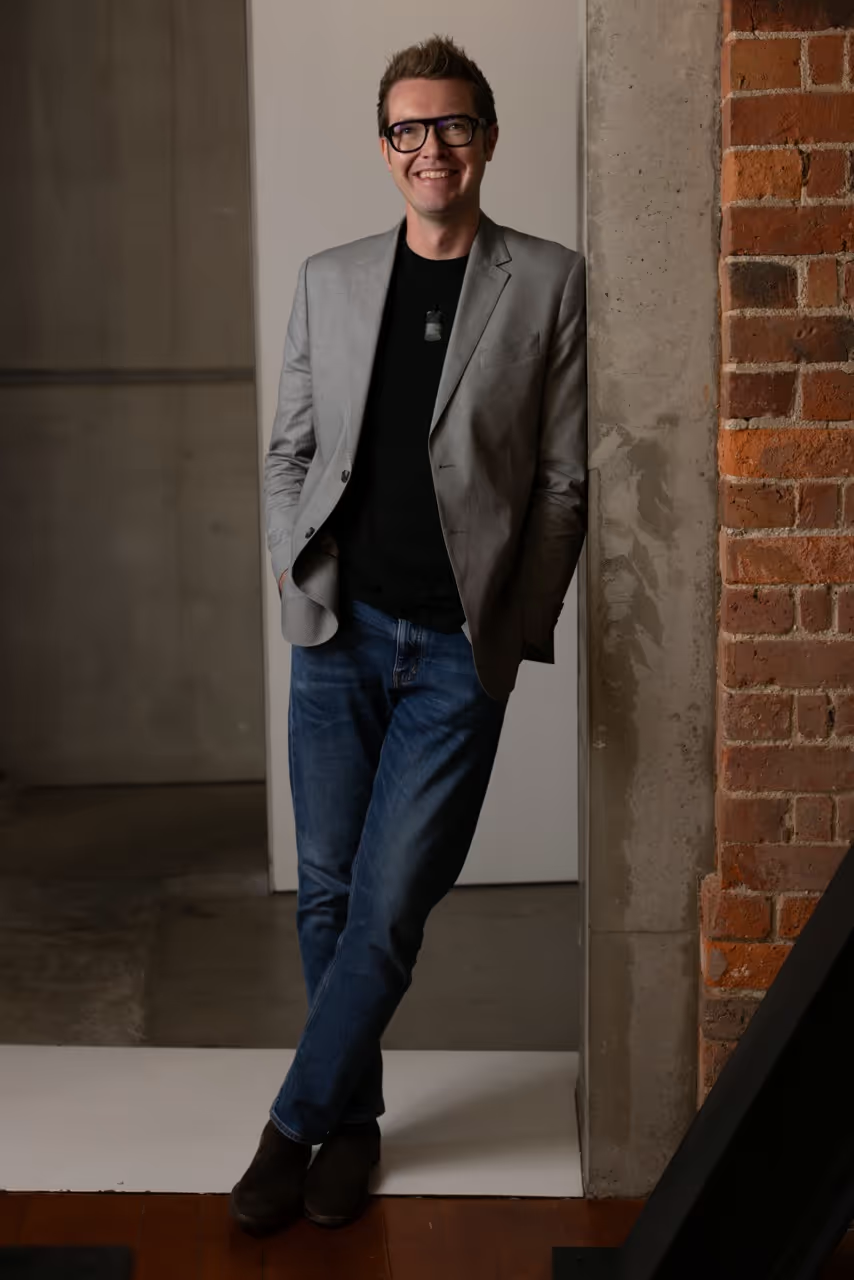
This work sits between the two and falls over when either side runs it alone. Nick Mackeson-Smith brings the people and learning side, Tom Murphy the architecture. Racheal Reeves covers the behavioural and research design that makes the discovery worth doing.
Client lead
Nick Mackeson-SmithStrategy
Performance
Culture
People
Technology
Related reading
If you’re weighing up an HRIS, a learning platform or a wider people technology stack, and you would rather understand what your people need than sit through another demo, that’s the conversation worth having.
Independent by design. We take no vendor commission, ever.
Make delivery inevitable.
© 2026 Five New Zealand Limited · NZBN 9429030159006 · Tāmaki Makaurau Auckland
Privacy notice

%20Medium.avif)